


 |
| Whilst out walking my local moor last month,I came across this injured juv Peregrine Falcon!It was sat directly under one of the 12 windmills that were erected,no doubt hit by one of the rotating blades. Now I`m all for renewable energy but at what cost to wildlife does it come!! |
 |
| Quickly capturing the bird which obviously had serious wing damage,I noticed that it had 2 rings attached to its legs.Aquick phonecall to a local raptor worker and he informed me that it was a last years male that he`d rung from a nest of 3 in the pennines.He couldn`t believe that the young bird had survived,as it was the fourth Peregrine he`d had back,the other three birds were all adult and were found dead below the windmills,2 from Scotland and one from scout moor. |
 |
| I arranged to meet my friend back at my home with the injured Peregrine.An hour later we were on our way to a falconer who would check the bird over and administer anti biotics to the bird.We felt confident that he would survive and be able to release him back into the wild! |
 |
| It was obvious that the bird had a broken wing but seemed healthy enough.A few days went by when Ian the falconer at Wild wings nr Walkden rung me up to tell me that the bird was being collected by an avian vet who specialises in these injuries and could give the bird a proper x ray to determine the damage,the bird was then taken to the vets nr Crewe.8 days went by before the telephone rung again and the news wasn`t good.The bird had been given antibiotics and the wound wasn`t showing any signs of healing up.The vet decided the best course of action was to put the young falcon down.Disaster!I don`t think there was anything else we could have done to try and get the bird fit but we tried our best for it! Last week I walked back up the moor for a recce,checking the turbines for anymore casualties,luckily there were none to be found.I scanned round with the binoculars before I set off for home and there in the distance on one of the many frnce posts was perched an adult Peregrine.Lets hope he doesn`t suffer the same fate as the young male,and goes on to breed for many a year to come!!! |
 |
| Avagas gorge on the outskirts of Paphos is a stunning natural feature.A small river has cut a deep steep sided gorge through the rocks as water flows from the high ground.Its not the Grand Canyon but is a fantastic place to visit.What brought me here was news of a rather special bird that is known to over winter here. |
 |
| It was a 20 min hike up to the gorge from the carpark,but I`d got wind of an interesting visitor from higher altitudes. |
 |
| This is what all the fuss was about,a Wallcreeper.A bird of high mountains ranging from southern europe to central Asia throughout the Himalayas. |
 |
| They breed at altitudes between 1000 and 3000 feet and so are extremely difficult to locate. |
 |
| They have a grey/blue plumage with darker tail and flight feathers.Its most striking plumage feature though are its extraordinary crimson wings,largely hidden when its wings are folded. |
 |
| They can be difficult to see on the mountain faces as they probe for insects and spiders with their long downcurved bill. |
 |
| In winter they are known to move down to lower elevations from where they breed.and can sometimes be viewed quite close.This was one of 2 individuals I found in the gorge,a known wintering spot! |
 |
| Indeed it was a pleasure to watch the Wallcreeper go about its feeding routine and rounded off for me a fantastic weeks holiday to Cyprus.Hope you enjoyed the images of this very special bird and I`d just like to wish my blog followers a very merry christmas and very happy new year,take care now!!! |
 |
| After my last post,I did say that I`d introduce you to a very special bird indeed,however I came across some more photos of birds that I`d like you see so the special one will have to wait to my final blog I`m afraid!I had a day out with German photographer Albert Stoecker who is now resident in Cyprus and he decided that we should go to Phassouri reedbeds which was about an hours run from Paphos.It was a good shout by Albert as some really good and varied species were seen! |
 |
| I`d never seen a Bluethroat before,so when I found this one singing from its lofty perch I duly obliged with the camera!These birds breed from Scandanavia through to central europe,but most prominent in Sweden,Norway,Finland etc. |
 |
| They are slightly smaller than the Robin with a very upright stance,they utilise long hops,varied by fast short runs,when in cover they creep furtively like a mouse and are capable of moving through the denseist vegitation! Migrants utilise ditches and swamp edges rather than drier hedgerows and other drier sites! |
 |
| I came across this juv Citrine Wagtail amongst the swampy marshland.I was told later that it had been present for about a week and again it was another first for me though I`d love to see an adult in full breeding plummage.Russia I believe is a major stronghold for the Citrine Wagtail with over a million pairs. |
 |
| Stonechat are one of the most commonest birds that overwinter in Cyprus,they seem to frequent every bush! |
 |
| Now a species of bird that often go overlooked in the reedbeds are the Crake familly.This Little Crake was feeding contently out in the open for a few minutes! |
 |
| An adult common crane dropped into the reedbeds with a juvenile in tow.One guy there mis identified it as a Demoiselle Crane which got us going a bit.However Common it was and we were more than happy to grab an image before they took flight! |
 |
| So Yes it was a fantastic few hrs there amongst the reedbeds,but they are known as a refuelling stop for lots of migrant birds on their way to Africa.Other birds seen were Common Buzzard,Hobby,Marsh Harrier and Peregrine,all on the lookout for a meal!Its certainly a place that I`ll be revisiting in the Spring and again I`ll let you know how I go on.Thanks for viewing the blog and i hope you enjoyed more tales from Cyprus!! |
 |
| A few images from my most recent trip to that lovely island Cyprus ! The Black Redstart is quite a common bird to Cyprus,good numbers seem to favour the island and are always a treat to see.This particular bird was around Aspro kremnos damm near to the airport! |
 |
| Blue rock thrush can usually be relied on to make an appearance,2 birds were found on the dam embankment,these birds are very wary and can be difficult to photograph! |
 |
| A beautiful male Finsch`s Wheatear can brighten up any ones day when viewed as close as this.Anarita park is a reliable area to find these birds.Returning 2 days later I counted 5 all disputing their winter territories! |
 |
| A rather distant Spur winged plover was located at Paphos sewerage works.It was my first encounter with the plover and I can`t wait to better my images of these birds.I believe they breed annually at the works,but are well protected behind the perimeter fence!! |
 |
| Another winter migrant is the Red throated pipit.The bold streaks to the breast and very distinct call alerted me this individual at Mandria fields!Its always nice to show some of the Cyprus species that overwinter here,but my next blog will include a bird that I only dreamed of seeing.Thanks for viewing the blog and take care! |
 |
| Last month I had the chance to visit the upper reaches of my local river Ribble,it is without doubt one of the best areas to watch the Atlantic salmon return to their birthplace to spawn.whilst at sea the salmon are blue black colour on their back with silvery sides,however when returning to the rivers they change colour dramatically especially the males to a bronze purple with red spots to their head and body. |
 |
| This fine male shows the full extent of the colour change.The silver adult at sea gives it great camouflage against predators.Seen from above the salmon blends into the dark water.From below a white belly is hard to see against the light sky! |
 |
| A leap of about 3 metres was needed to clear this rapid,giving me a good chance to capture the fish with the lens.Not many actually made it whilst I was there,but it wasn`t through lack of effort. |
 |
| The weir was one of many obstacles on their homeward journey,with sport fisherman,otter,mink all taking their toll on the stocks.They are known to live for 12 to 13 yrs so make this journey maybe 10 times in their lifetime. |
 |
| This female of about 10 pounds just fell short and landed on a small rocky outcrop,amazing to witness!I only caught the tail end of the run this year,so I`m already looking forward to returning next year in the hope of watching these fish complete this amazing journey.Thanks for dropping by and looking at my blog and I hope you enjoy the images of the Atlantic salmon!!!! |
 |
| The middle of last monthI got the opportunity to visit a large pine wood that held a good population of red squirrel!Not as common as they used to be due to contamination from grey`s it was a chance to get close to these small mammals. |
 |
| A good offering of monkey nuts were scattered about the forest floor and it wasn`t long before the reds came down from their lofty perches!It seemed that they had had a good breeding season as the majority of squirrels seemed to be juveniles! |
 |
| They are born without hair and blind in early summer and leave the drey after about 10 weeks! |
 |
| Squirrels moult twice a year,in late summer and after winter,they also moult their ear tufts once.Their diet consists of spruce and pine cones,acorns,berries and funghi and cache their food in the autumn.The majority of the nuts we left out for them were immediately buried amongst the vegitation. |
 |
| Ideal red squirrel habitat.the Squirrels here were helped along by a supplement of nuts and seeds provided by forest rangers. |
 |
| Some of the young squirrels literally took peanuts from my hand.an amazing experience!! |
 |
| They have been present for nearly 2 weeks now! |
 |
| You wont get much closer than this. |
 |
| These 2 are having a tug of war with a large worm! |
 |
| A nice fly by was appreciated. |
 |
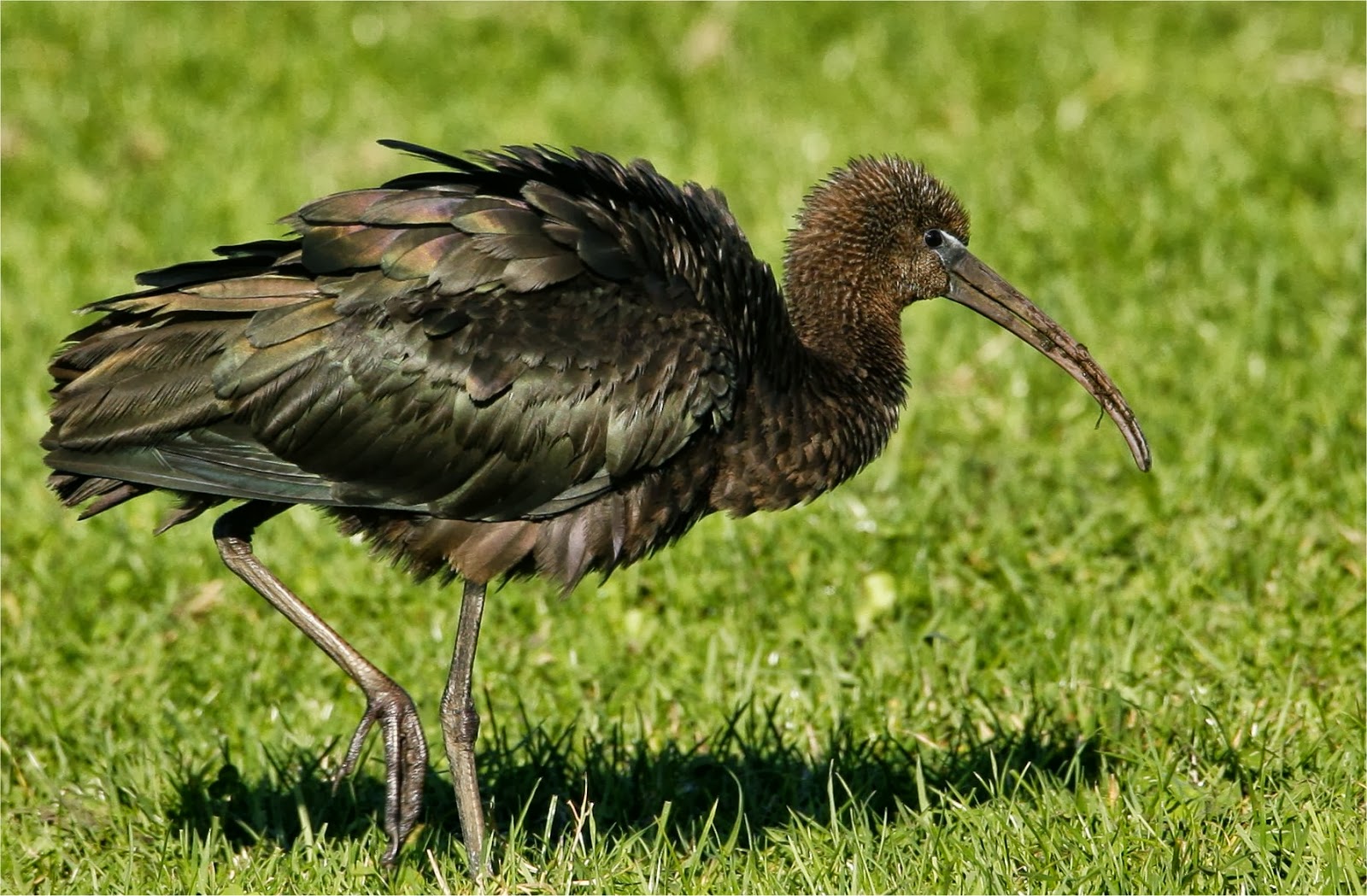
| Checking the local bird site forums recently,I was made aware of 4 Glossy Ibis that had decided to drop into some farmers fields nr to Bolton,gtr manchester.A quick 25 min drive and I joined the hoardes of enthusiasts gathered along the B road overlooking the fields. |
 |
| 4 birds were avidly feeding in a ploughed area of the meadow. |
 |
| I think this bird was a juvenile due to its dour plummage. |
 |
| Constantly probing the earth and feeding mainly on earthworms. |
 |
| The following day the light was a lot better and I returned to capture more images of these `black Curlews` as one guy described them,a good comparison dont you think! |
 |
| Its always nice when rarities appear,but better when they fill the frame. |
 |
| They have been present for over a week now and flit between 2 sites 3/4 mile apart.If you are local to Bolton and have a keen interest in birds,why don`t you pop along to the Bob Smithies pub on Chorley old road where you will encounter these very tolerant birds!!!Thanks again for dropping by and taking the time to read my latest blog!! |

