A WALK ON THE WILDSIDE---PAUL FOSTER

hit counter

Wednesday, 17 April 2013

Local patch,Jackhouse/Ossy moor

 A walk around my local patch looking for migrants was the purpose of my latest sortie and I wasn`t to be dissappointed.First up was this greater spotted woodpecker which is resident to the area.
 There are 3 roe deer that inhabit the woods,often I come across them when on my recces,the stag eyed me cautiously before bounding away to safety!
 On my way up to the moor,I spooked one of a pair of Little Owls that regularly breed here.
 At last, one of the migrants I`d hoped to see.Another flew northwards up the gully at the side of the moor.With the wind blowing South/Southwest for the last couple of days,migration should gather momentum!The first willow warbler only arrived on the 14 April, some 2 weeks later than last year!
 Wheatears have been present on the moor for the last 8 days,with good numbers now being seen regularly.
 Part of a flock of Golden plover that have been around the moor the last few weeks.Numbers have built up to 58 lately, with I expect more to come on their push Northwards!
I got within 50 yards of the birds feeding on the sheep grazed meadow.I carefully scanned each individual bird to see if any Dotterel were mixed in with the flock.Not to be though,  but a few Dotterel have been reported locally!So in all, a rather productive few hours after work.Just a matter of time before the sand martins return to their nest burrows.I`ll keep you informed and thanks again for dropping by!!!!!

Friday, 8 March 2013

Hen Harriers (Cyprus)

 Its always a bonus to see birds of prey in their natural environment,these hen harriers were observed on a recent trip to Cyprus.They have been over wintering for the last 5 months or so in the flat arable farmlands.
 The male Hen harrier must be one of the best looking raptors about with its slate grey plummage and black tips to the wing!
 They were hunting the farmland on the lookout for pipits and skylarks.
 This harrier gave me some quite close views as it searced the meadows.
 I was watching some Wheatear when the Harrier appeared,needless to say the Wheatear didn`t hang around.
 Almost Kestrel like,the Harrier searched for prey amongst the scrub.In 5 mins of watching this bird, I didn`t see it catch anytyhing!

Saturday, 2 March 2013

Cyprus revisited

 With it being half term,we took a weeks break to Cyprus,staying in Paphos.My trusty camera came with me again and I managed a few hrs a day out in the countryside.February is usually quiet on the birdfront but it was a bonus to be out in good weather.This over wintering Finsch`s Wheatear was still in the same area as last time,though they usually depart to breed come mid march.
 I was determined to see and photograph Red Throated Pipit,as last time during october, I heard them calling but couldn`t locate any amongst the throngs of skylarks,crested larks and meadow pipits.This time my luck was in and 2 were heard calling and duly photographed.As it was Feb, they have not come into breeding plummage, but their bold stripes made them easily identifiable! 
 
 They have a striking terracotta pink throat come april/may but I think these individuals were both 1st winter birds.

 It was great to see Northern Wheatear out here.This particular bird was one of several I located by the coast.They were definately fresh in from Africa, as the previous few days they were no where to be seen.Where they are bound for,who knows,but always one of the first migrants to return to British shores!
 Sardinian warbler were quite common all around.I even found a pair nest building in some low scrub!
On my last trip, a bird that I heard regularly,but never saw  was the Black Francolin.A very terrestrial,sedentary,shy and unobtrusive bird.It is about the size of a grey partridge and very vocal.
Its call is highly charachteristic and normally the first sign of its presence.It is a striking looking gamebird, with the male having a black head and breast,seperated with a broad reddish brown neckband.A white cheek stripe is added for good measure.Very difficult to approach, I was 150 yds away when these shots were taken.This finishes my first account of Cyprus and another will be added shortly showing a few Hen Harrier shots.Thanks for looking in!!!!!!!!!

Monday, 4 February 2013

Purple Sandpiper

 It`s been a while since my last post,so with this in mind I made a determined effort to get out and about with the lens.The forecast for saturday was to be clear and bright,so 5.00am found me heading to the North Wales coast in anticipation of some action!I`d done a bit of research,prior to the 100 mile journey and knew that there was a good chance of encountering Purple Sandpiper and Snow Bunting.
 The Purple Sandpiper was a bird I hadn`t seen before and I was keen to obtain a few images.They are known to over winter in the same areas, so hopefully wouldn`t be too difficult to find.They are attracted to rocky outcrops and penninsulas especially those exposed to vigorous wave actions.
 They dart and run swiftly  over the seaweed laden rocks,feeding on small molluscs and crustaceans.A rather stout headed dumpy bird with short greenish legs,well adapted to this type of environment.
 After a good mile walk up the promenade I was becoming slightly despondent,the tide was in and I was struggling to find any signs of the Sandpipers.It was difficult trying to look on the seaward side of the barrage were they were sure to be .It was only the flick of a wing of one of the birds  that betrayed its presence to me and on investigation 4 birds were hidden amongst the rocks,bingo.They are one of the few birds that seem quite tame and a low approach got me within 10 metres of the party.
 A pleasent 15 mins was enjoyed with the waders, before I left them to go about their feeding,no doubt to stock up their reserves for the journey back to the  north.A few pairs breed in Scotland but they are primarily a bird of the high arctic, including Greenland/Iceland/Faeroes and Spitzbergen.One day, I hope to see them in their full breeding plummage in these far off places, but for the moment I was just happy to have spent time in their company on the North Welsh coast.Hope you enjoy the shots and thanks for dropping by!!!!!!!!!!!!!!

Sunday, 18 November 2012

Cyprus 3 (Raptors)

 I think most birders and photographers if asked, would put raptors and owls at the top of their hit list.I for one just love watching these birds of prey in their natural environment.On first catching sight of the above raptor thermaling high up in the mountains,I thought Eagle,mainly due to its size.It turned out to be a Long Legged Buzzard,quite local to the area but not common.
 However there was no mistaking this bird of prey.It was one of a pair I spotted quite a distance away and slowly they edged nearer to allow identification.Bonnelli`s Eagle.They are also known to breed on Cyprus with good numbers reported every year fledging youngsters.
 Again an easy id on this one Peregrine falcon, which Nick spotted patrolling a large cliff face where there were lots and lots of pidgeons.Against a brilliant blue background just awesome.
 The area shown here is part of Anarita park looking out towards the coast,anything passing through can usually be picked up.In peak migration times all the main raptors are usually around.Merlin/Red Footed falcons/Kestrel/Eagles/Harriers/Buzzards/Hobby
 all have been seen here annually!
A slightly commoner raptor,Sparrowhawk.This one narrowly missed a Finch`s Wheatear which 10 secs earlier, had been sat on the very same rock.A lucky escape indeed.There were plenty of larks/pipits and Linnets around so she won`t be going hungry for too long!I`ll finish this account of the Anarita park area and next time I`ll concentrate on the coastal lowland areas were more interesting birds of prey were observed!thanks for dropping by and taking the time to view!!!!!!

Thursday, 15 November 2012

Cyprus (2)

 My next days birding in Cyprus was in the good company of Nick Moss, who had also been granted a few hrs leave from familly duties.Nick had visited the island previously and had a good knowledge of some sites not too far from Paphos.We headed inland to the hillsides and were instantly rewarded with great views of Finsch`s wheatear,this bird was similar to the endemic Cyprus Wheatear in appearance, but was overwintering here, having left its breeding grounds further to the  north .Nick assured me it was a real find and it afforded us both good close views.


 Short distance migrant probably bred in Turkey!!!!
 A Blue Rock Thrush was spotted sunning itself on a prominent rock.These birds are very fidgety and can be difficult to approach, but it hung around long enough for us to admire!!

 The white nape on the Finsch`s Wheatear extends right  down its back, thus distinguishing it from the local Cyprus Wheatear, which are very common in Summer.They meanwhile had all migrated South by the time we got there!

 A juvenile Masked Shrike put in an appearence atop a small bush,another common bird to Cyprus.The males are stunning in their summer plummage!
Nick spotted a Red Backed Shrike on the lookout for prey,but we didn`t see it catch anything.It was a bit late in the year to find any warblers as such, but we still had an enjoyable time looking for any that might have stayed behind.What we did encounter later though, was a few of the raptor species that were here.I`ll tell you about those in my next blog on Cyprus.Again many thanks for dropping by and hope you enjoyed the images!!!

Sunday, 11 November 2012

Cyprus Oct/Nov 2012

 Having recently returned from 9 days holiday in Paphos Cyprus with my familly,I`d like to share with you a few of the many images I took whilst out on my early morning jollies.I just love going to these different countries, not only  to experience the local culture and cuisine, but also to see the varied wildlife and fauna that is also on offer there!

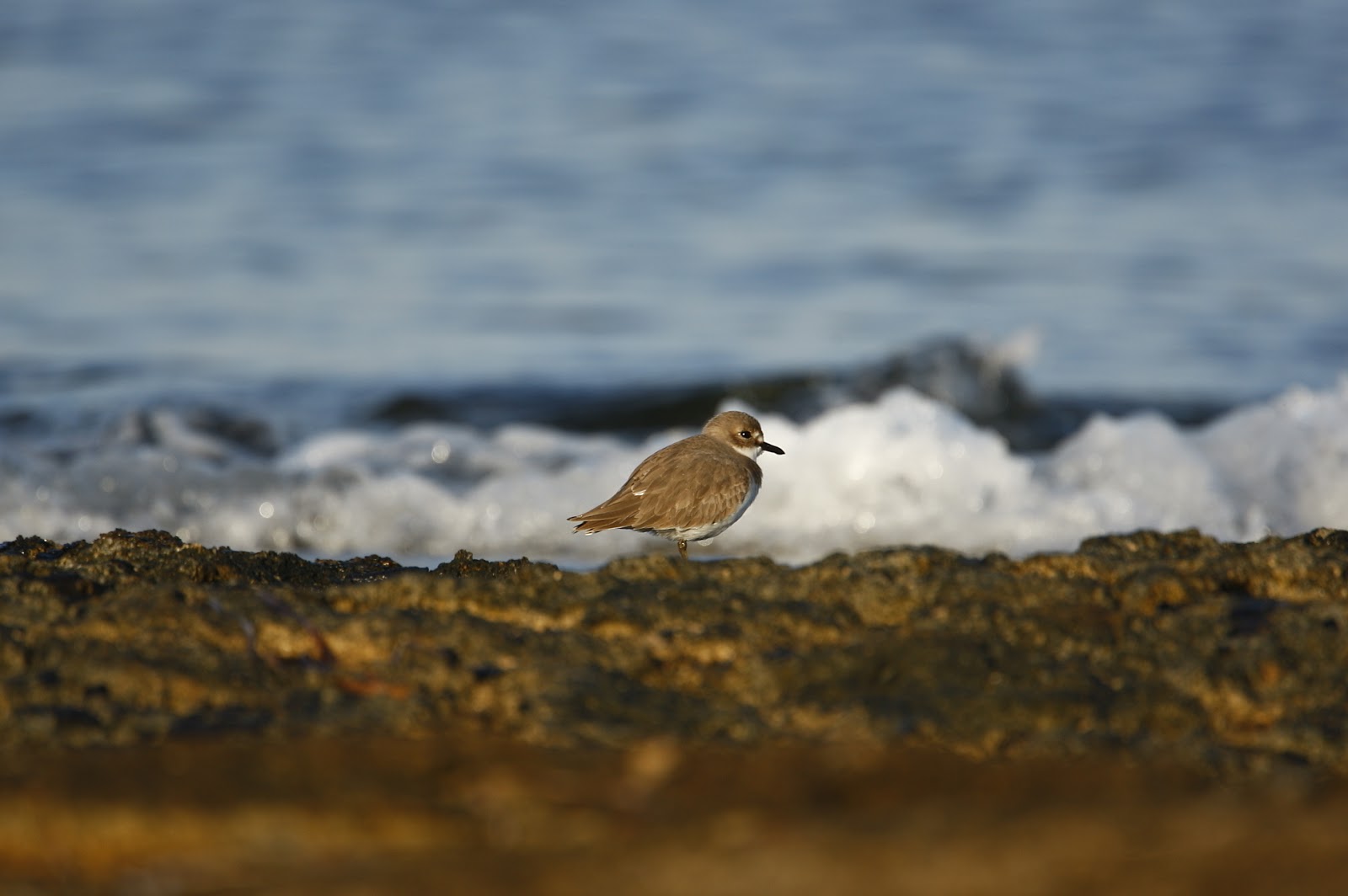
Having done a little research prior to departing,my first place of call was the headland around the corner from Paphos Harbour.It was a usually reliable site for Greater Sand Plover, with up to 5 birds being present at this time of year. A 5.45 am start and mile and a half walk from the hotel found me scanning the the rocky coastline!  
A few of these chunky,long legged and thick billed plovers sometimes overwinter here after breeding in the semi deserts of Turkey and eastwards through central Asia.True to the book,bingo I found 5 individuals patroling the shoreline!
 They were approx 200 metres away when I first saw them, but with a careful approach I got within 30 metres which was sufficient for a few images.

 I was told later that it was a bit hit and miss finding the birds, as the coastline stretches a good few miles!

 As always when abroad, the weather is usually reliable and the early morning light adds favourably to the task of photography!

The Plover were spread out over about15 metres,I couldn`t quite manage a group shot!
I`ll post more images of the other species I stumbled across in forthcoming blogs,thanks for looking in...........

Saturday, 10 November 2012

Early morning stroll!

 An early morning walk around my local moor gave me an opportunity to photograph these Fieldfare.
 It was a lovely crisp day and a party of about 15 birds dropped in to feed on the insects that were hidden in the grass.
 Very skittish and difficult to approach, I was sat having a cup of coffee when they afforded me excellent views.I think they are the most handsome of the thrushes.Usually they are up in the trees feeding on the bright red berries of hawthorn and rowan, it was nice to see them at ground level!
 
A real bonus to the day was this pair of Little Owls who were making the most of the warm sunshine.I had only ever seen 1 bird at this particular site, on an old ruin of a barn,so I`m hopeful they will pair up for next season!

Saturday, 27 October 2012

Garden visitors

 This Red Admiral was a welcome visitor to my back garden a few weeks back, as are indeed any sort of butterflies to be honest!This one appeared just as the last of the Buddleia flowers began to disappear!
 I think this is a juvenile Sparrowhawk.I`d only just put the peanut feeders back in position for the winter,when it gatecrashed the party and took a bluetit!
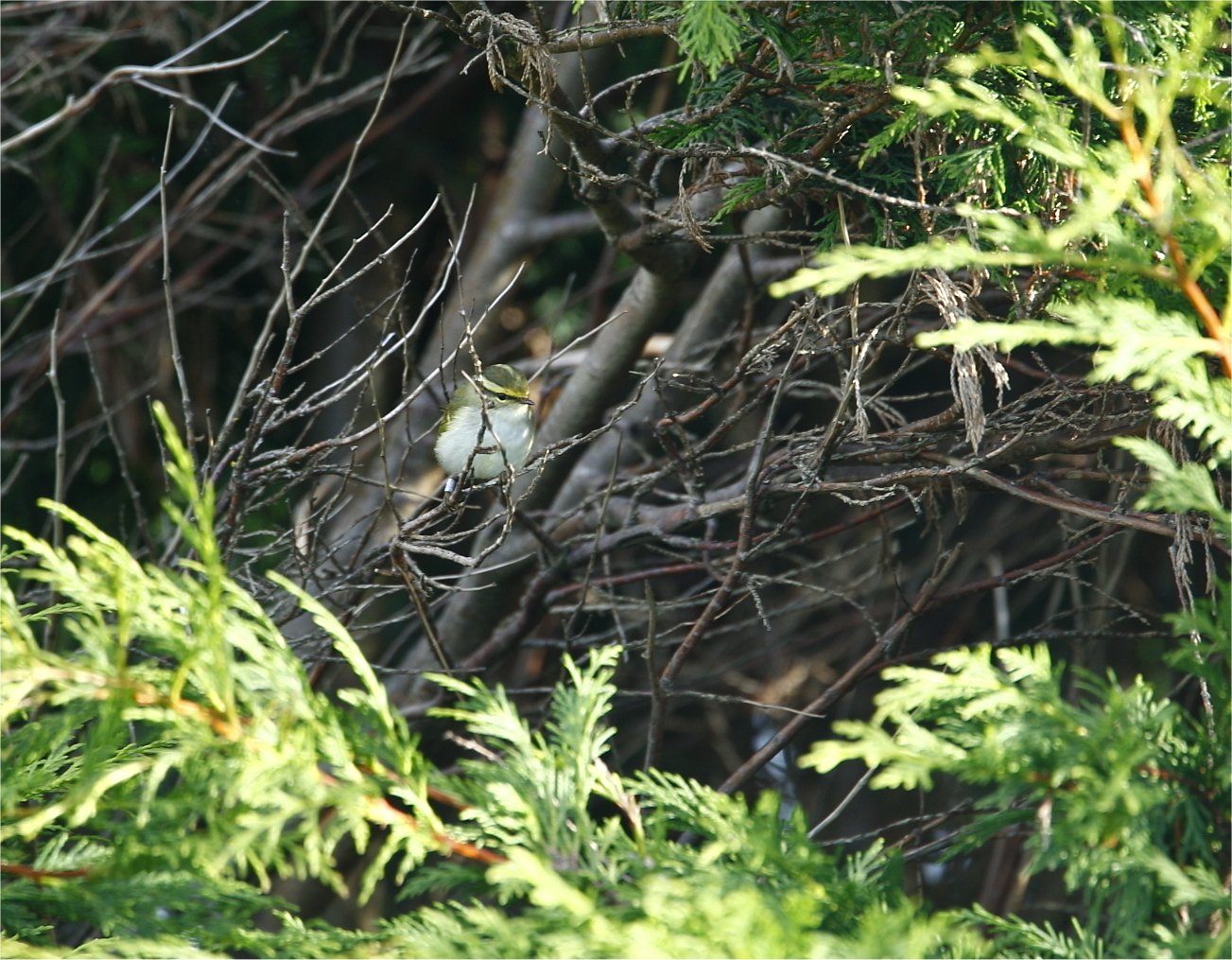
 Yes I did say garden visitors!News went out a few weeks ago of a Pallas`s Warbler being found in a back garden in Knott End.They are native of the far East, but sometimes turn up on the East coast during migration and are about the size of a Goldcrest!
The house owner being a local birder, was only too keen for people to come and view the Asiatic warbler and many people, myself included,took full advantage.Very difficult to photograph,I did my best.I believe it stayed around for 4 days before it continued on its way!